This blogpost was written by Pease Park Conservancy Horticulture Coordinator, George Rojano. George studied Earth Systems at Stanford and worked as a full-time farmer with Urban Roots before joining Pease Park Conservancy. He puts much of his love and expertise into the plants at Pease Park, and is leading an interesting species study at the park. Read on to learn more!
Please note: We do not encourage folks to seek out the spring discussed in this blog post due to the extremely difficult terrain and the large patches of poison ivy in the area. Let’s leave the isopods be!
In early May, staff at Pease Park Conservancy stumbled upon Big Boulder Spring, a local spring that feeds into Shoal Creek within the park. According to this map of springs in the City of Austin, this spring has a record of Caecidotea reddelli, a rare, blind groundwater isopod crustacean that is endemic to Central Texas. This isopod is a “species of concern,” which means there are signs of population decline, but a lack of sufficient information for the species to be listed on the official Endangered Species Act list..
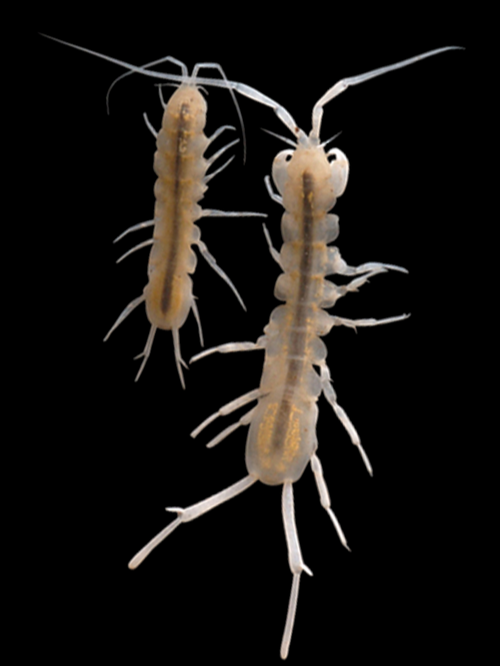
Caecidotea reddelli
Finding the Experts
Seeking to be good stewards of the park and its many inhabitants, we reached out to experts in the field at the San Marcos Aquatic Resources Center, Randy Gibson and Justin Crow. We learned that the presence of these c. reddelli isopods indicates that the groundwater is not too significantly polluted for life to persist in the aquifer. Also, because c. reddelli is a food source for the Barton Springs Salamander (Eurycea sosorum), our discussion led to theorizing about the potential of this salamander population existing in or around Shoal Creek.
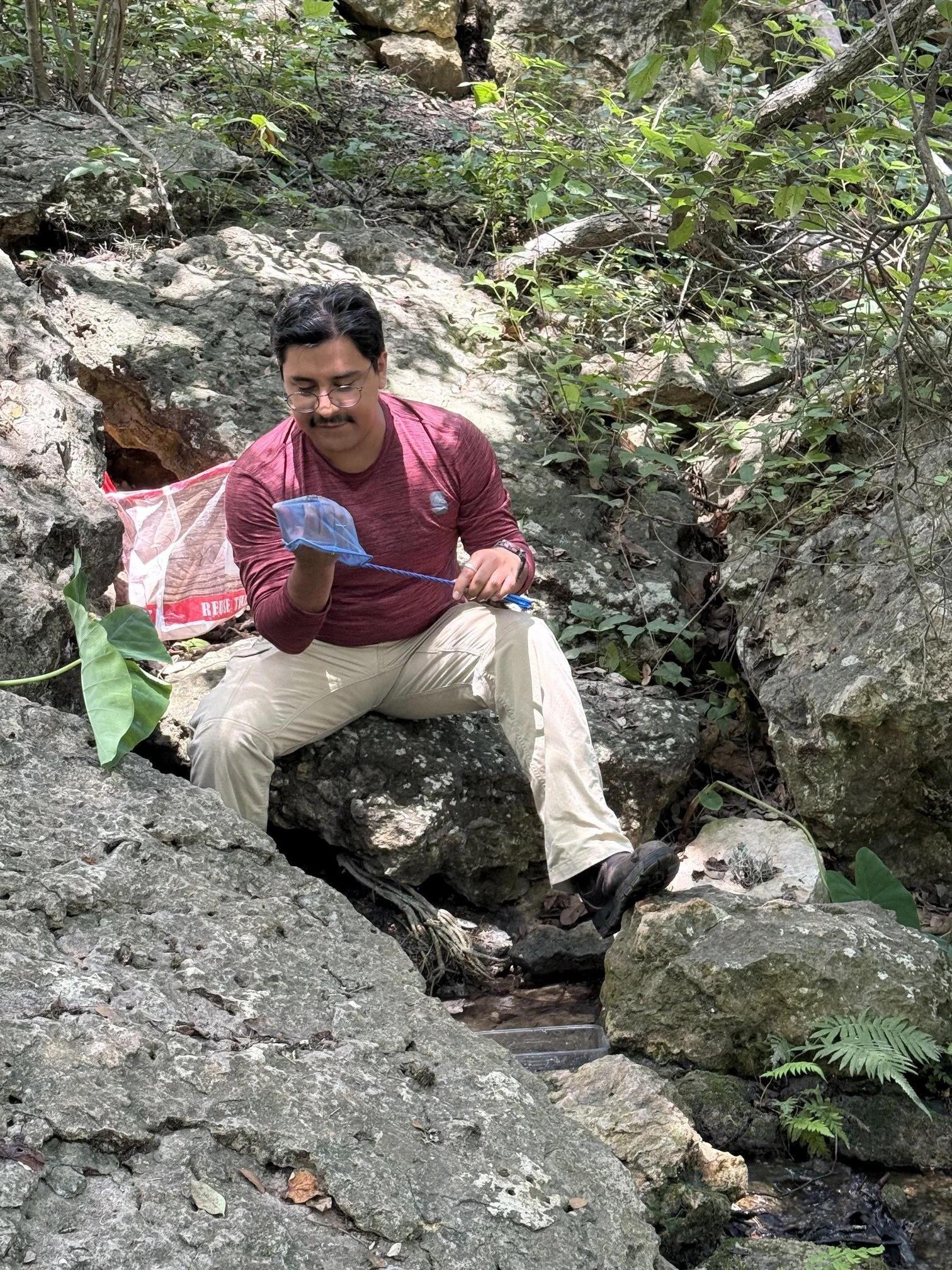
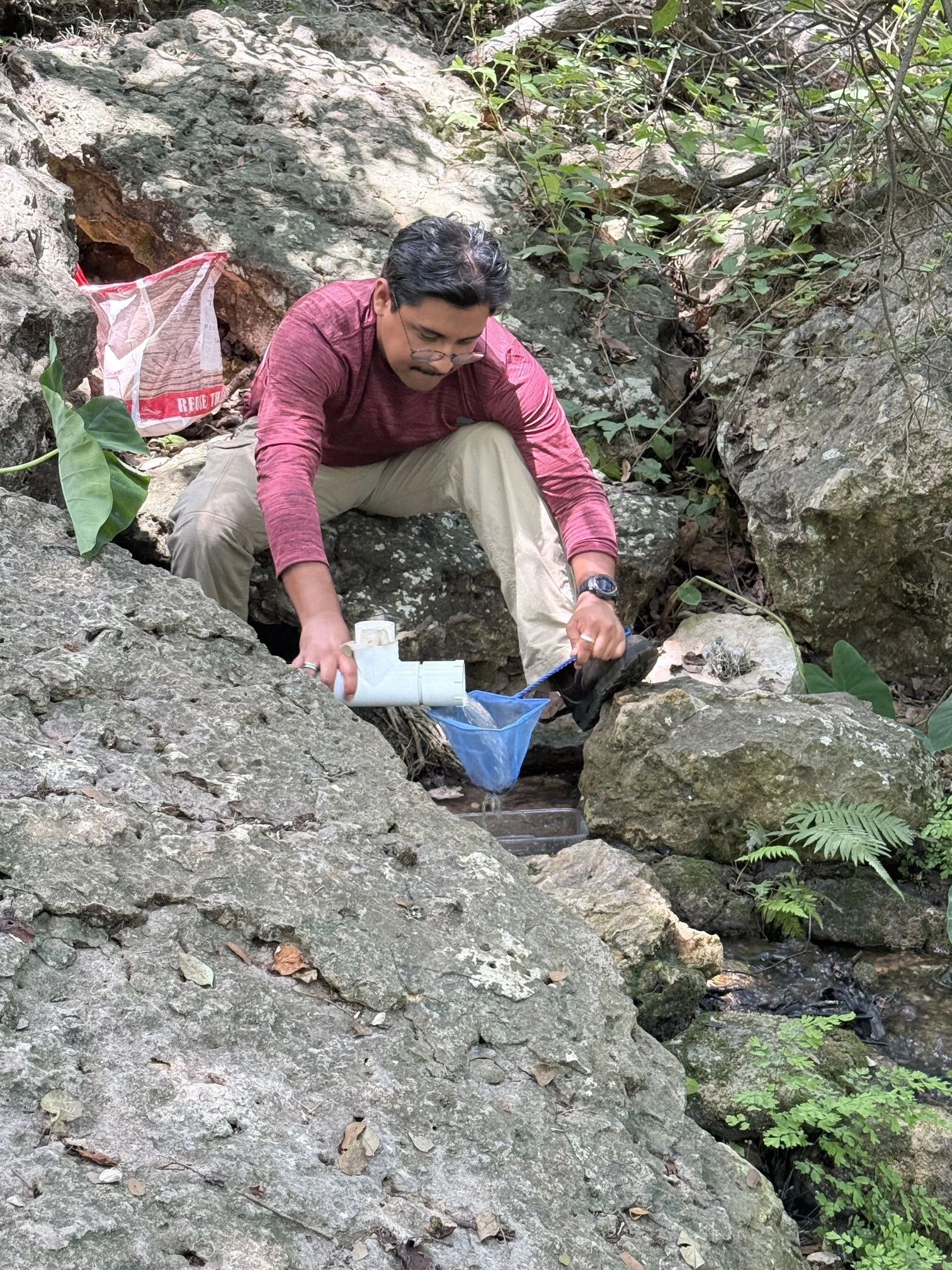
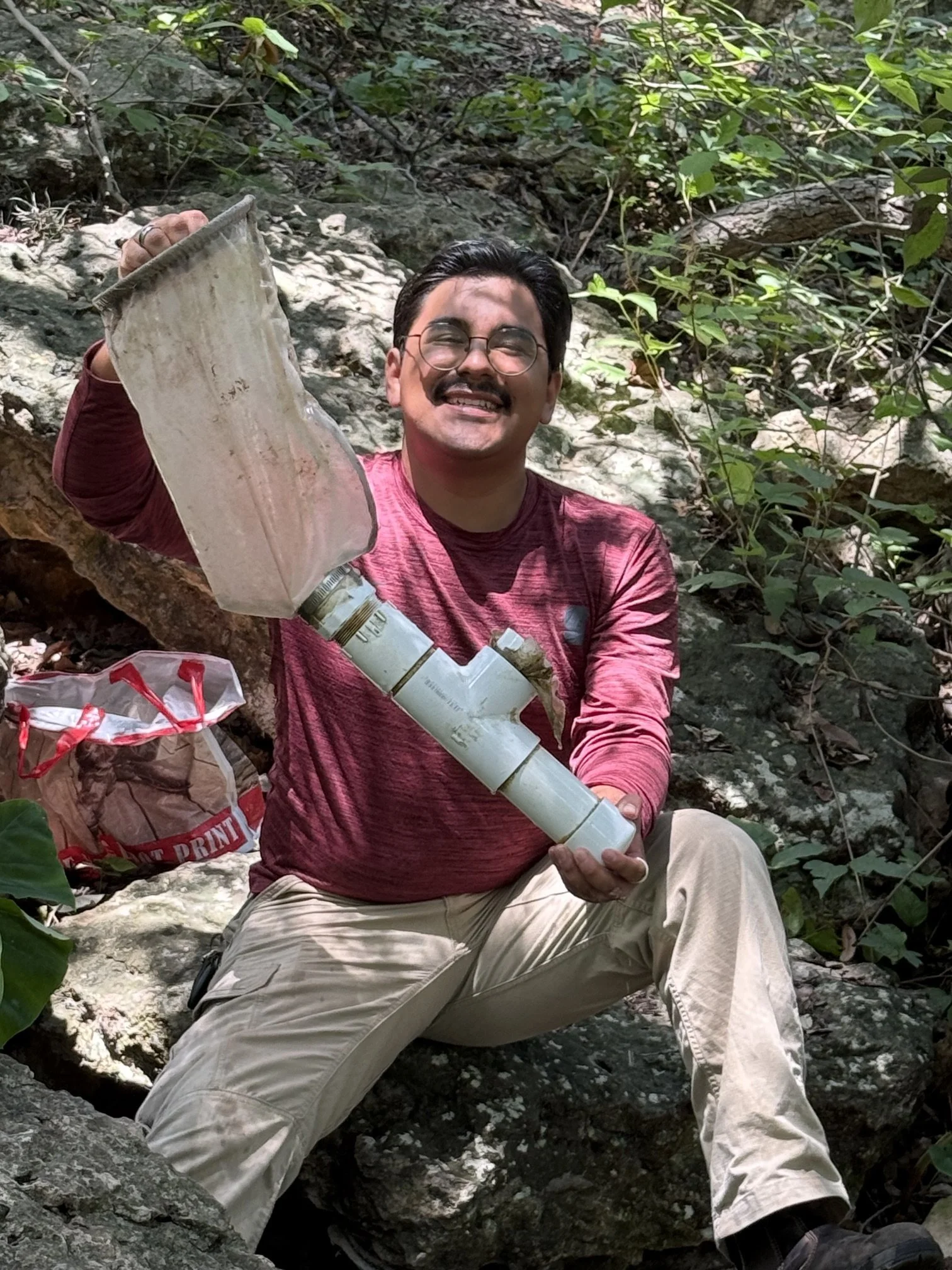
Around this time, Pease Park Conservancy staff attended a Parks Board meeting and were introduced to Nathan Bendick, the Conservation Program Supervisor with Austin Watershed Protection. After scouting out the spring together, Austin Watershed loaned Pease Park Conservancy a net, materials for sampling, and gave us a crash course on how to sample for salamanders and invertebrates coming out of the spring.
Searching for Salamanders
Austin is home to three endemic species of Salamander: the popular Barton Springs Salamander (Eurycea sosorum), the Austin Blind Salamander (Eurycea waterlooensis), and the Jollyville Plateau Salamander (Eurycea tonkawae). These critters are small, only up to three inches long, and they spend the entirety of their lives underwater. We are excited to keep an eye out for these aquatic Austinites!
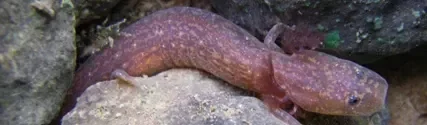
Eurycea sosorum
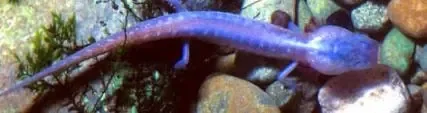
Eurycea waterlooensis
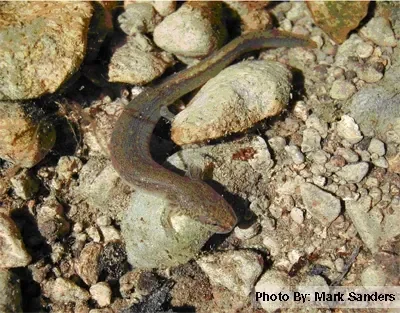
Eurycea tonkawae
Photo source: Austin Watershed Protection
Since the start of June, Pease Park Conservancy staff have been checking the net every other day, weather permitting. Thus far, we have observed invertebrates, including the Caecidotea reddelli and the Stygobromus balconis, the Balcones cave amphipod, another species of crustacean. A few of these invertebrates have been stored in ethanol bottles and sent to Austin Watershed Protection for observation and study. If we find a salamander in the net, we will make a quick phone call to our friends at Austin Watershed Protection. We will continue to check our net and carefully flip rocks around in the spring.
To date, no salamander localities have been recorded here, but it is possible that salamanders once existed in the aquifer that feeds this spring.
Other Observations
Shoal Creek and Big Boulder Spring are home to many other lovely flora and fauna. Some things we have spotted while checking the spring include Virginia opossum (Didelphis virginiana), Eastern fox squirrel (Sciurus niger), Turkey vulture (Cathartes aura), and countless pollinators.
Along Shoal Creek, we have spotted sunfish (Lepomis punctatus), red-eared sliders (Trachemys scripta), Rio Grande leopard frog (Lithobates berlandieri), tons of little tadpoles, minnows, and even the shedded skin of an unidentified snake!
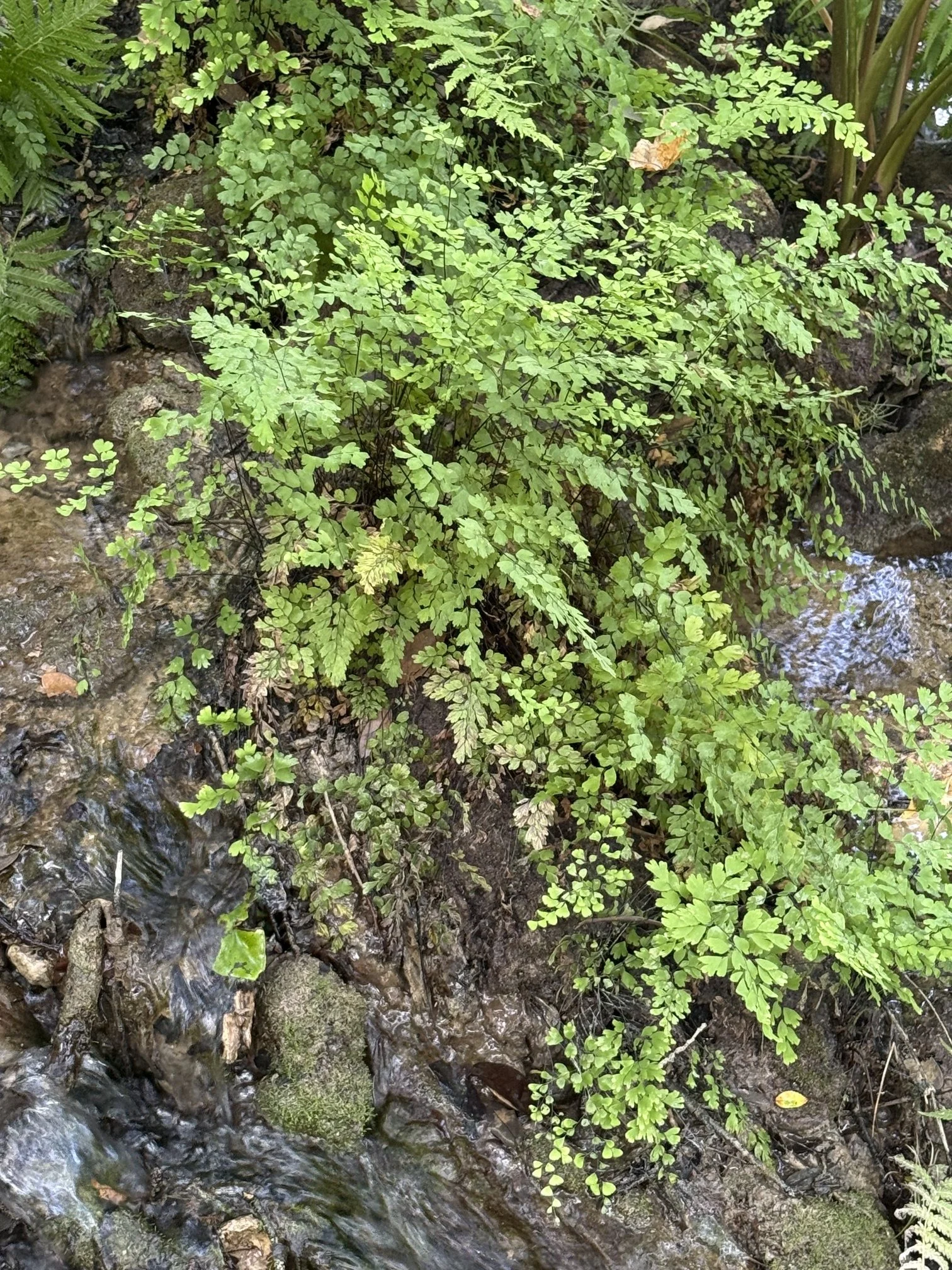
Near the spring, the plant population is very different from what you’ll spot just a hundred feet away. A variety of beautiful native ferns, carpets of moss along boulders, and vines from grape (Vitis vinifera) to Virginia creeper (Parthenocissus quinquefolia) thrive near the spring. Species identification and observation have been done primarily by our staff, but we were assisted by Marisol Farias, who at the inception of this project was an intern biologist at the San Marcos Aquatic Resources Center. Marisol also assisted in conducting the habitat assessment.
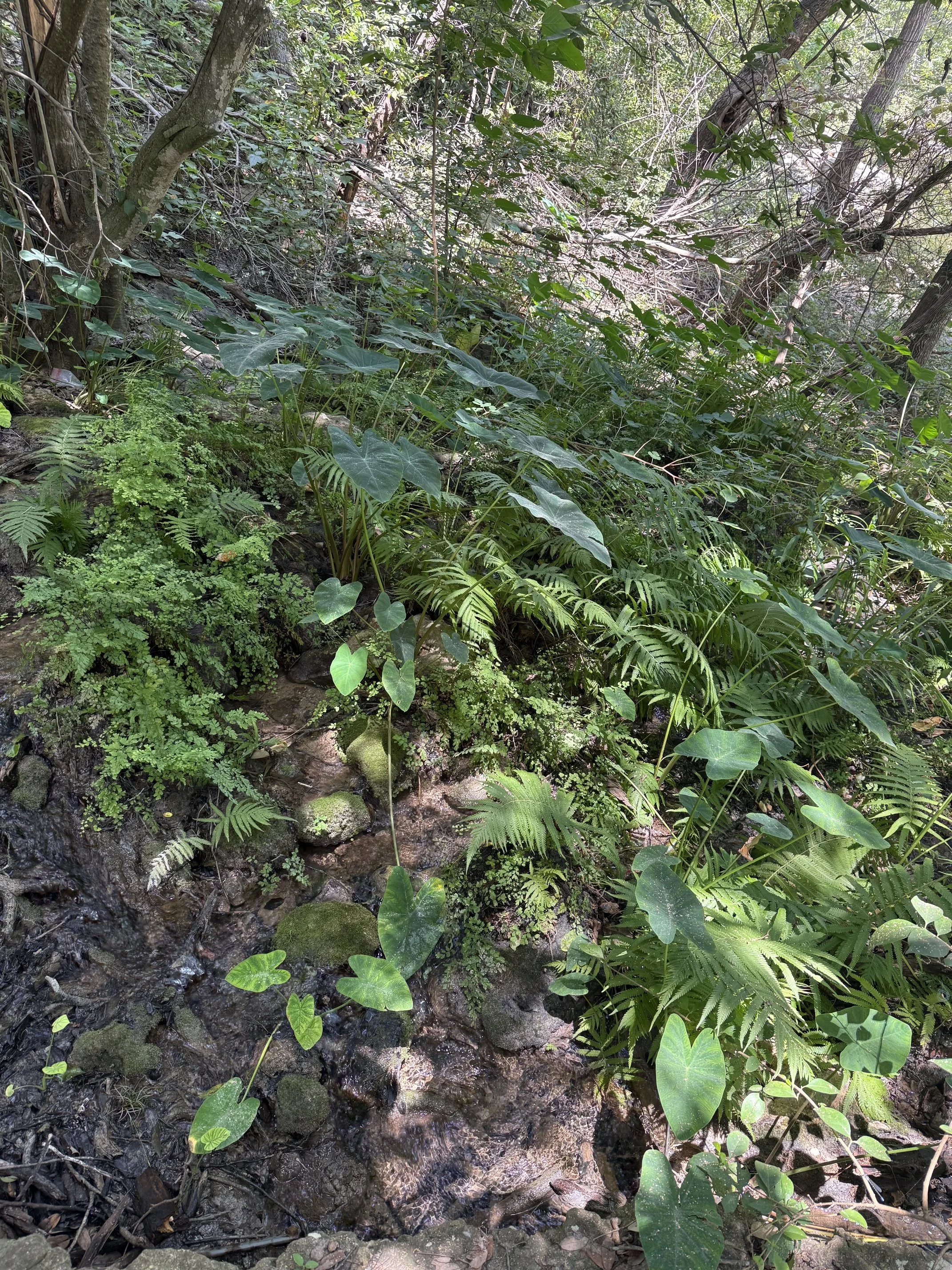
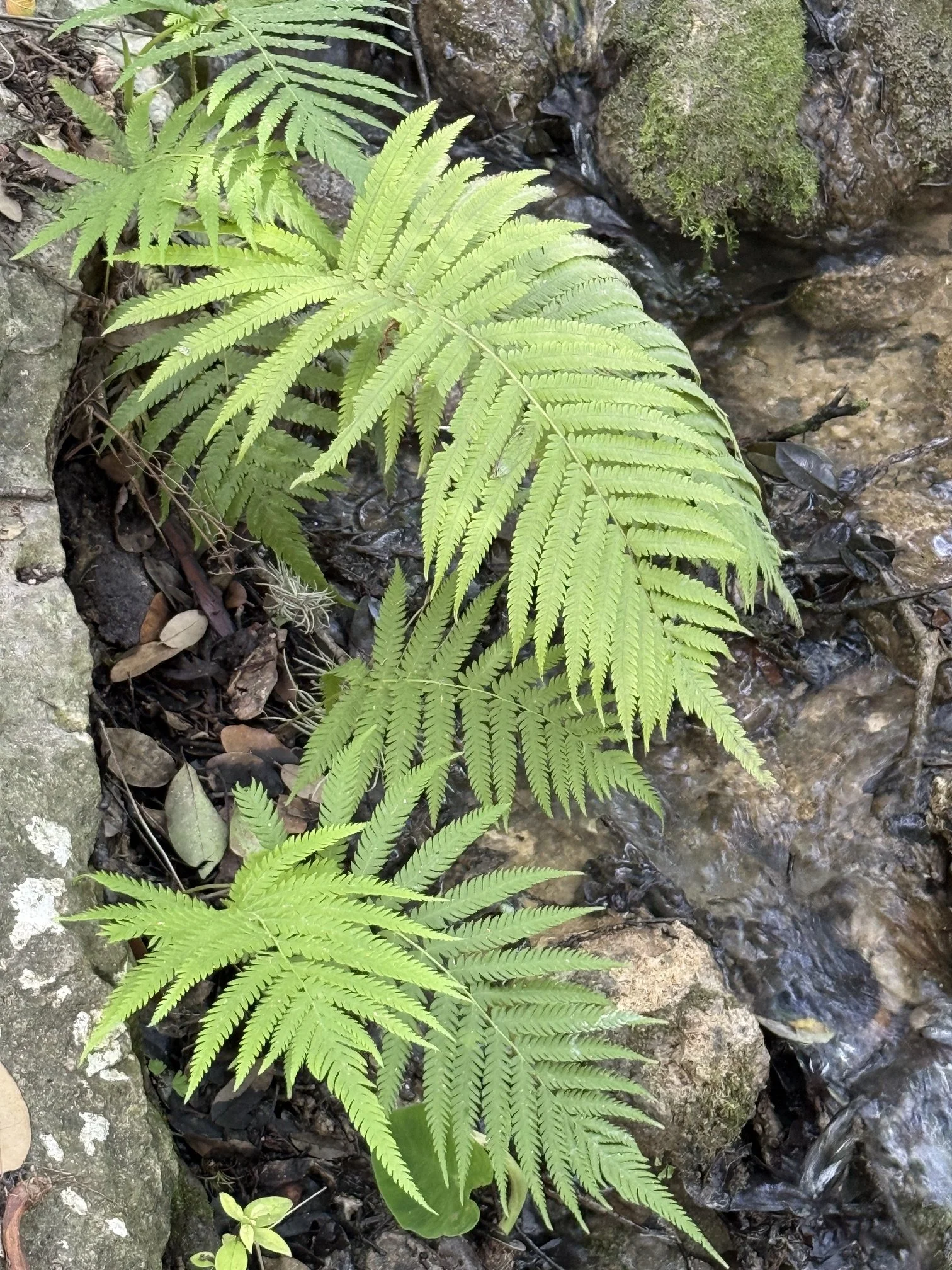
Unfortunately, there are also invasive Elephant’s Ear and invasive ligustrum growing throughout the area. We have also observed multiple waves of trash that end up deposited at the spring and surrounding areas, usually after heavy rains. The staff at Pease Park Conservancy are aware of these environmental stressors and are working to restore this area.
We are grateful for all of the experts who have consulted with us on this project. We will share any additional findings on our blog. It’s a joy to be able to explore this green space and discover (and help protect) the habitats of Pease Park.